
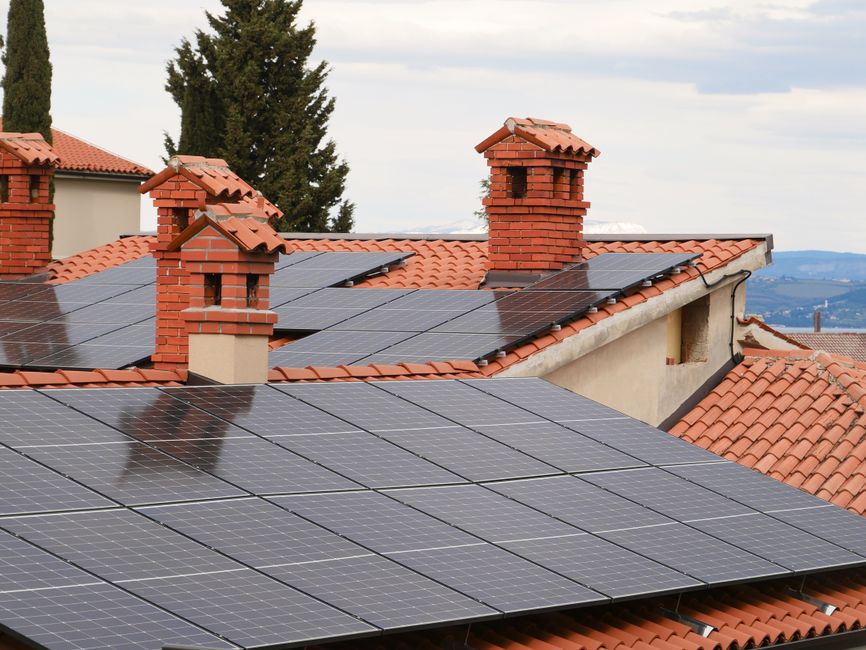
Are solar panels suitable for a roof in Cortland, NY?
Solar panels can work well on many homes, but the condition, shape, age, and structure of the roof matter as much as sunlight exposure. A roof should be evaluated as part of the solar-planning process, not treated as an afterthought.
Local homes must also handle seasonal snow, freezing temperatures, wind, ice, and repeated freeze-thaw cycles. These conditions do not automatically rule out rooftop solar, but they make proper roof assessment and secure installation especially important.
Should the roof be replaced before solar panels are installed?
Usually, solar panels should not be installed over a roof that is near the end of its useful life. Removing and reinstalling an array later can add cost, create additional roof penetrations, and increase the chance of damage if the work is not carefully coordinated.
A roof may deserve replacement before solar installation if it has:
- Curling, cracked, loose, or missing shingles
- Widespread granule loss
- Water stains or active leaks
- Sagging roof sections
- Deteriorated flashing around chimneys, walls, or plumbing vents
- Repeated repairs in the same area
- An expected remaining life shorter than the planned solar system
The goal is not to replace every roof automatically. A relatively new, well-maintained roof may be ready for panels after a proper inspection. The key question is whether the roof is likely to remain dependable for the full service life of the solar equipment.
Can an older roof support solar panels?
Age alone does not determine whether a roof can support an array. Structural design, framing condition, past alterations, roof shape, and existing loads all matter.
Solar panels and their mounting hardware commonly add several pounds per square foot to the roof. That weight is modest compared with seasonal snow loads, but the combined load must still be considered. In the local climate, roof design may need to account for snow accumulation, drifting, wind uplift, and ice-related conditions.
A structural review may be especially appropriate for:
- Older homes with limited construction records
- Roofs with visible sagging or uneven planes
- Buildings with attic framing that has been altered
- Homes with previous additions or enclosed porches
- Roofs already carrying skylights, heavy equipment, or multiple layers of roofing
- Arrays planned over a garage, porch, or other addition
Panels should be attached to structural framing according to an approved design. Mounting only to roof sheathing is not a substitute for proper structural attachment.
Which roof surfaces work best for solar?
The most useful roof area is generally a plane with good sun exposure and limited shade. Roof orientation, pitch, nearby trees, chimneys, dormers, and taller buildings all affect the amount of electricity an array can produce.
A roof does not have to face one exact direction to be suitable. East- and west-facing surfaces may still be useful, while heavily shaded areas may produce less energy than their size suggests. A roof with several small planes may have less practical space than a larger, simpler roof.
Solar planning should account for access pathways and required clearances. Panels cannot always cover every open section of roof because emergency access, roof edges, ridges, vents, and other features may need to remain clear.
In neighborhoods with mature trees, summer shade may be easy to overlook during a winter assessment. Seasonal changes in tree cover should be considered before deciding how much roof area is truly productive.
How do snow and ice affect rooftop solar?
Snow usually does not mean solar panels are impractical. Panels are smooth and angled, so snow may slide or melt away more readily than it does on some roof surfaces. However, snow can still temporarily reduce production, and sliding snow or ice can create a hazard near entrances, walkways, parked vehicles, and lower roofs.
Important considerations include:
- Whether snow can slide from the array toward a walkway
- The location of gutters, doors, decks, and neighboring roofs
- Whether snow guards or other controls are appropriate
- The combined weight of panels, racking, roofing, and snow
- Safe access for inspections or repairs during winter
- Whether roof valleys or lower sections may collect drifting snow
Panels should not be treated as a dependable method for removing snow from a roof. Homeowners should also avoid climbing onto a snowy or icy roof to clear the array. Electrical equipment and roof surfaces can create serious fall and shock hazards.
Do solar panels cause roof leaks?
Solar panels do not inherently cause leaks, but installation requires careful attachment and waterproofing. Most rooftop arrays use roof penetrations for mounting hardware, wiring, or related equipment. Poorly placed fasteners, damaged shingles, inadequate flashing, and improper sealants can create problems.
A sound installation should preserve the roof’s drainage pattern and use compatible flashing and mounting components. Extra attention is needed around:
- Chimneys and wall intersections
- Plumbing vents
- Valleys and roof edges
- Dormers and skylights
- Areas with older or brittle shingles
- Transitions between different roofing materials
A common misconception is that sealant alone provides permanent waterproofing. Sealants can age, crack, or separate. Proper flashing, fastening, and integration with the roof assembly are more dependable than relying on surface caulk.
What happens when the roof needs repairs later?
Solar panels may need to be temporarily removed if roofing work is required beneath the array. This is one reason roof condition should be reviewed before installation.
Future repairs can also be affected by the array’s layout. Panels placed over complicated roof transitions, valleys, or hard-to-access areas may make later maintenance more difficult. Keeping roof records, photographs, product information, and installation documentation can help future roofing and electrical work proceed more smoothly.
Homeowners should also ask how warranties are affected by roof work, panel removal, flashing repairs, and maintenance responsibilities. The written terms matter more than verbal assumptions.
Are permits required for rooftop solar?
Permits and inspections are generally part of rooftop solar installation. Requirements may include building, electrical, structural, fire-safety, zoning, and utility-related approvals.
Within Cortland, building-mounted solar systems are subject to local zoning and permit requirements, and installations must comply with New York State building and electrical codes. Local code requirements can change, so permit details should be confirmed before construction begins rather than assumed from an older project.
The permit process is not just administrative. It helps document that the roof attachment, electrical connections, emergency access, and structural design meet applicable requirements.
What should a homeowner check before moving forward?
A practical pre-installation review should answer these questions:
- How many years of dependable roof life remain?
- Is the roof deck dry, sound, and adequately attached?
- Can the framing support the panels, racking, wind, and snow loads?
- Which roof areas receive useful sunlight throughout the year?
- Will access paths and emergency clearances reduce the available panel area?
- Could snow or ice slide toward a walkway or entrance?
- How will future roof repairs be handled?
- Which permits, inspections, and utility approvals apply?
- Are wiring routes and electrical-panel capacity adequate?
- Are trees, chimneys, dormers, or neighboring structures likely to create shade?
A solar array should be planned together with the roof, not simply placed on the largest open surface. For area households, the most durable result usually comes from coordinating roof condition, structural capacity, weather exposure, access, and code compliance before any panels are attached.
